Key-hole surgery, explained before it is done.
Most operations that once needed a long cut across the abdomen can now be done through three or four small ones. We use laparoscopic and hysteroscopic techniques for gynaecological and general surgery wherever they suit the case — and we tell you plainly when they do not.
What laparoscopic surgery is.
A laparoscope is a thin telescope with a camera on the end. It goes in through a small cut near the navel, and the surgeon works on a magnified picture on a screen, using fine instruments passed through two or three other small cuts, usually between 5 and 10 millimetres long.
Hysteroscopy works the same way but needs no cut at all: the camera passes through the cervix to look inside the womb. It is used both to find a problem and, often in the same sitting, to treat it.
Because the cuts are small, there is usually less pain afterwards, a shorter stay in hospital and a quicker return to normal life than after open surgery. Not every case is suitable. Your surgeon will explain why key-hole surgery is or is not right for you before anything is booked.
Less pain
Small cuts mean less pain after the operation, and usually fewer painkillers.
Shorter stay
Many patients go home the same day or the next, depending on the procedure.
Quicker recovery
Most people are up and walking within hours and back to light work sooner.
Smaller scars
A few small marks that fade with time, in place of one long wound.
Conditions we treat by key-hole surgery.
These are real views through a laparoscope, the same camera picture the surgeon works from. They are shown so you can see what each condition looks like; some patients may find them uncomfortable to look at.
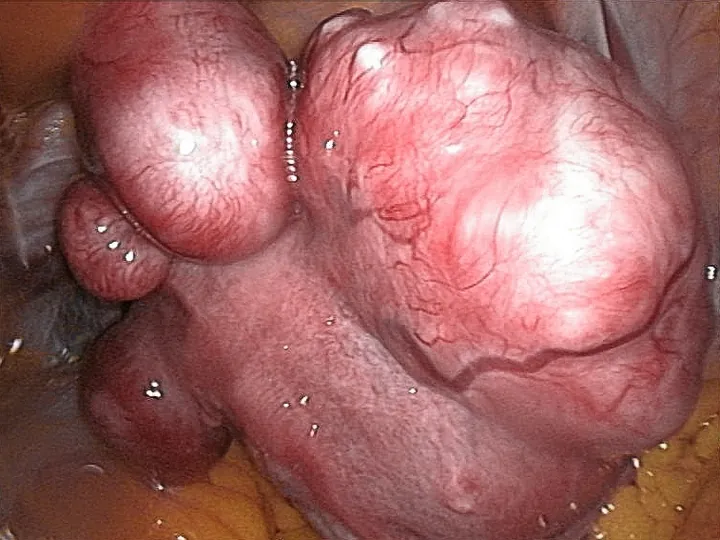
Fibroids
Non-cancerous lumps of muscle in the wall of the womb, which can cause heavy periods, pain or pressure. They can be removed while keeping the womb (myomectomy).
Photo: Hic et nunc, Wikimedia Commons, CC BY-SA 3.0
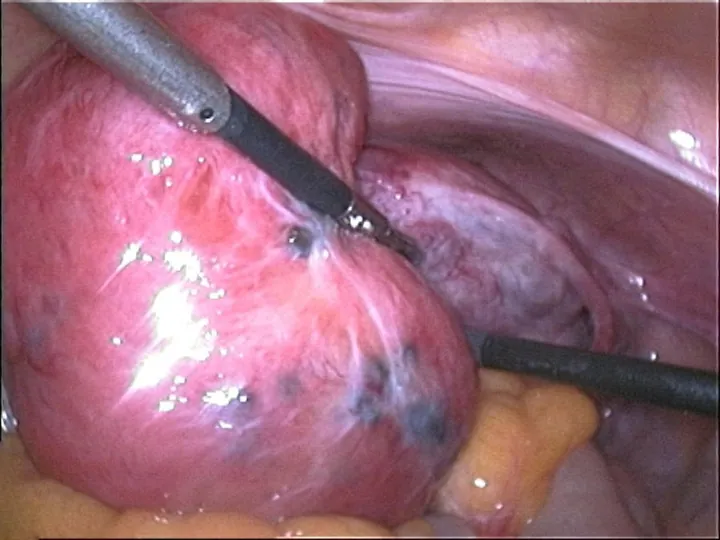
Adenomyosis
The lining of the womb grows into its muscular wall, making the womb bulky and periods heavy and painful.
Photo: Hic et nunc, Wikimedia Commons, Public domain
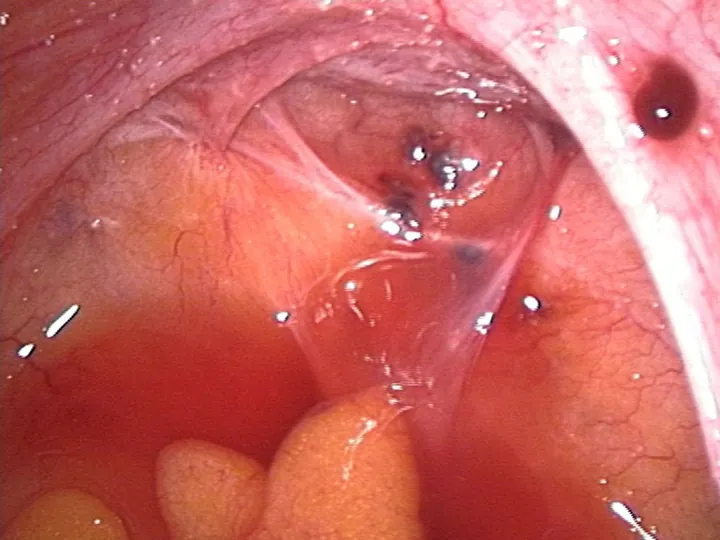
Endometriosis
Tissue like the womb lining grows outside the womb, often behind it, causing painful periods, pain during intercourse and difficulty conceiving.
Photo: Hic et nunc, Wikimedia Commons, Public domain
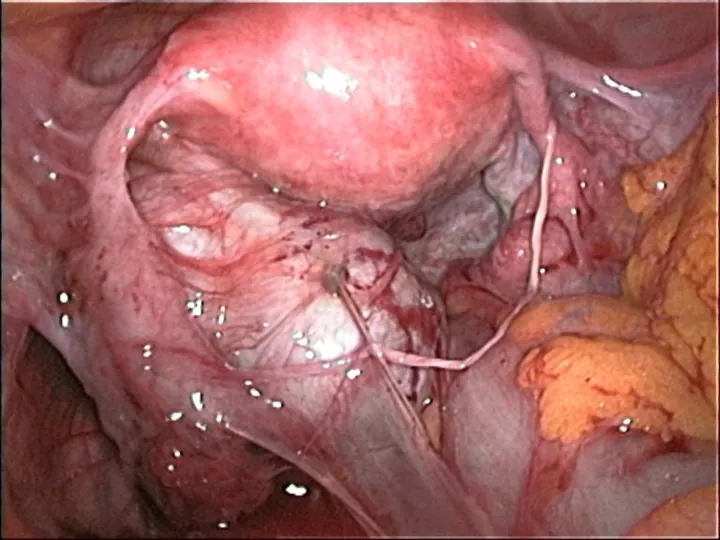
Frozen pelvis
Dense scar tissue (adhesions), usually from severe endometriosis or old infection, sticks the womb, tubes, ovaries and bowel together.
Photo: Hic et nunc, Wikimedia Commons, Public domain
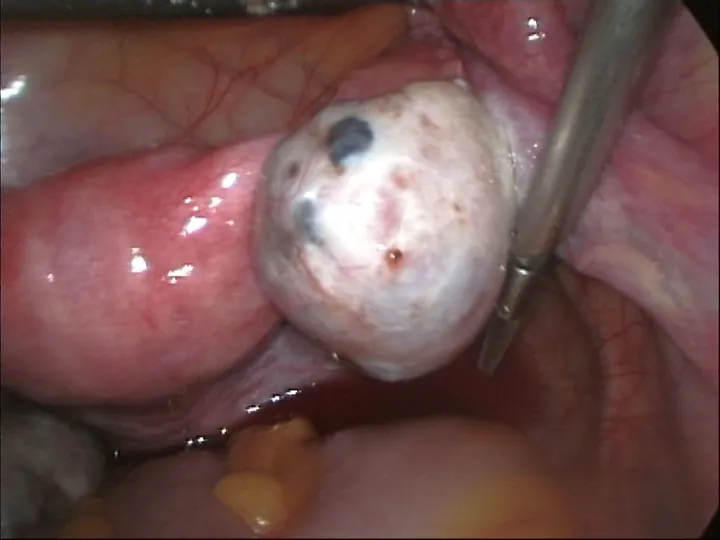
Ovarian cysts and masses
Fluid-filled cysts or solid swellings of the ovary. Many can be removed while keeping the healthy part of the ovary.
Photo: Hic et nunc, Wikimedia Commons, CC BY-SA 3.0
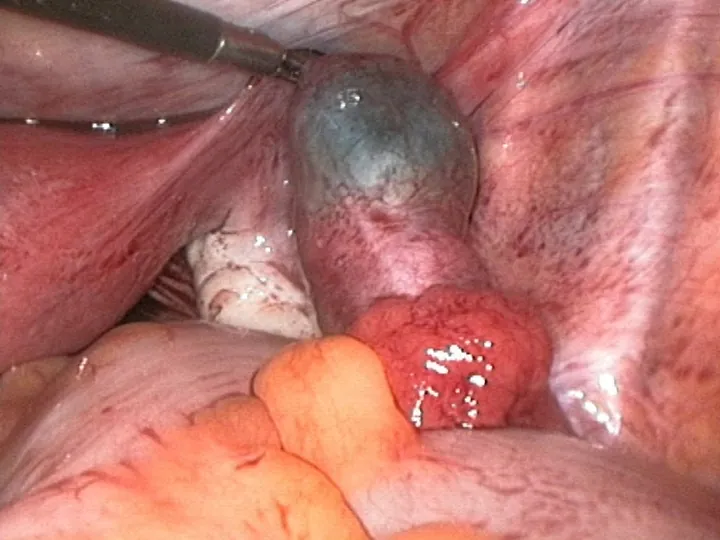
Ectopic pregnancy
A pregnancy growing outside the womb, most often in a fallopian tube. It needs urgent treatment before the tube bursts.
Photo: Hic et nunc, Wikimedia Commons, CC BY-SA 3.0
What this covers at our hospital.
Gynaecological laparoscopy
- Ovarian cysts and masses
- Fibroids (myomectomy)
- Adenomyosis
- Endometriosis
- Frozen pelvis (dense adhesions)
- Ectopic pregnancy
- Removal of the womb (laparoscopic hysterectomy)
- Diagnostic laparoscopy for pelvic pain or infertility
- Checking whether the fallopian tubes are open
Hysteroscopy
- Investigating abnormal or heavy bleeding
- Polyps inside the womb
- Fibroids that bulge into the womb cavity
- Scar tissue (adhesions) inside the womb
- A septum or other shape problem in the womb
- Assessment before fertility treatment
General laparoscopic surgery
- Gallbladder removal for gallstones
- Appendix removal
- Hernia repair
- Diagnostic laparoscopy for abdominal pain
Step by step.
-
01
Consultation
The surgeon examines you, goes through your scans and reports, and explains the operation, its alternatives and its risks.
-
02
Tests and fitness
Blood tests and a scan if needed, and a check by the anaesthetist so the operation is safe for you.
-
03
The operation
Done under anaesthesia in the hospital theatre. A family member is kept informed while you are inside.
-
04
Home and follow-up
You go home with clear instructions for the wounds, your medicines and when to come back for a check.
What patients ask us.
Is laparoscopic surgery safer than open surgery?
For many operations it means less pain, less blood loss and a shorter stay, but no surgery is free of risk. Occasionally a key-hole operation has to be changed to an open one partway through for safety. Your surgeon will talk through the risks for your particular case.
How long will I stay in hospital?
It depends on the procedure. A diagnostic laparoscopy or a hysteroscopy is often a day-care procedure. Larger operations such as a hysterectomy usually need a short stay. You will be told what to plan for at the consultation.
When can I go back to work?
Most people return to desk work within one to two weeks of a laparoscopic operation, and sooner after a hysteroscopy. Heavy lifting has to wait longer. The surgeon will give you dates that fit your operation and your job.
Will I need general anaesthesia?
Laparoscopic surgery is done under general anaesthesia. Some hysteroscopies need only a short anaesthetic or sedation. The anaesthetist sees you beforehand and explains which applies to you.
This page is general information, not medical advice for your own case. Your consultant will advise you after an examination.
Other specialist care at the hospital.
Infertility Treatment
Tests, treatment and counselling for couples finding it hard to conceive, with both partners looked after together.
Learn moreIUI Treatment
Intrauterine insemination with follicle tracking by scan and semen preparation in the hospital’s own IUI lab.
Learn moreRecurrent Pregnancy Loss
Tests to look for a cause after repeated miscarriages, treatment where one is found, and close care through the next pregnancy.
Learn moreHigh Risk Pregnancy
Closer checks, earlier scans and a delivery plan made in advance, for pregnancies that need more than routine care.
Learn more